Carbon Sequestration Naturalization
The Carbon Sequestration Naturalization project will expand St. John’s urban forest by reforesting approximately 11 hectares of land to promote naturalization.
The sites chosen were previously cleared of trees during initial phases of development and either were undeveloped or intentionally left vacant as open space. All sites are on current City-owned land.
The objectives of this project are to reduce our community’s carbon footprint and better our community specifically by
- reducing greenhouse gas emissions (GHGs) by lowering the need for turf maintenance at these sites, and
- by sequestering carbon dioxide in the atmosphere and transforming it into biomass.
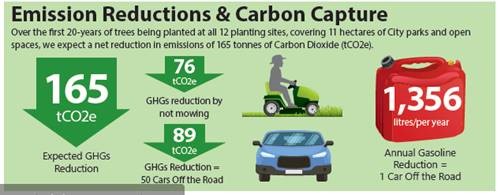
The expected net GHGs reduction from this project is 165 tonnes of Carbon Dioxide (tCO2e). Of this at least 76 tonnes is avoided by reducing turf management practices such as lawn mowing at the planted sites. Approximately 89 tonnes will be captured over the first 20-years of trees being planted. This is equivalent to about 50 passenger vehicles being taken off the road, or 39 home’s energy use for one year.
Funding for this $106,163 project is cost-shared by three levels of government with the Government of Canada contributing 40% through the Low Carbon Economy Leadership Fund, the Government of Newfoundland and Labrador contributing 33% through the Climate Change Challenge Fund and the remaining 27% provided by the City of St. John’s.
Locations
Trees will be planted in City of St. John’s parks and open spaces and are public trees that are protected under the Parks By-law. Any tree which is located on or overhangs public property is considered a public tree.
The City’s Urban Forest Management Masterplan identifies the significance of replanting previously cleared and undeveloped sites, including public spaces. Locations were chosen as they are City-owned land that match tree planting criteria and are in the Parks and Open Spaces regular maintenance schedule.
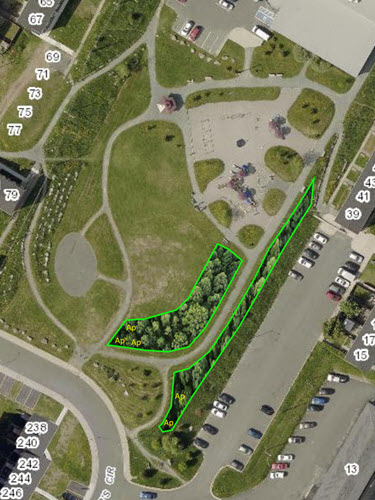 Buckmaster Circle |
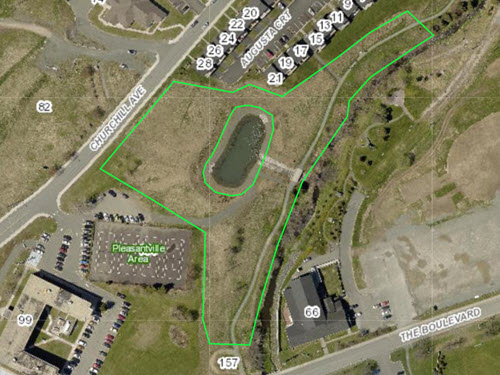 Churchill Avenue Pond |
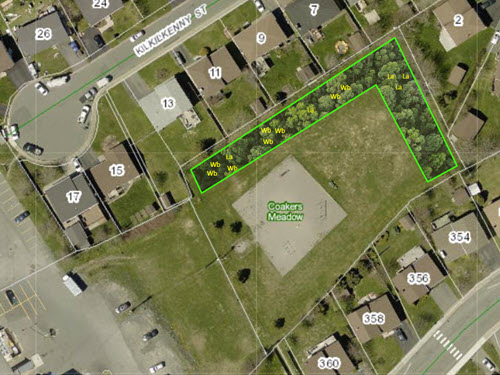 Coakers Meadow Plaza |
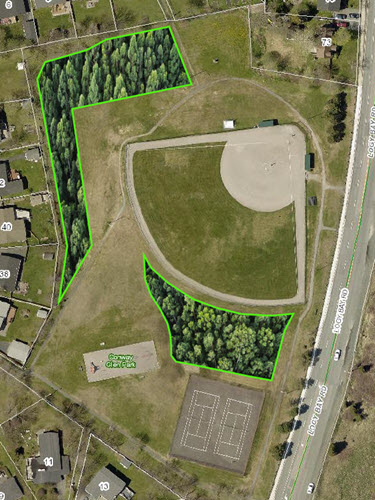 Conway Glen Park |
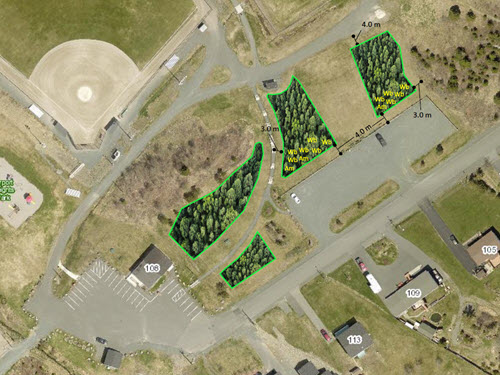 Dennis Lawlor Park |
 Larch Park |
 Mundy Pond Park |
 Poplar Avenue & Empire Avenue |
 Quebec Street |
 Rennie's Mill Road |
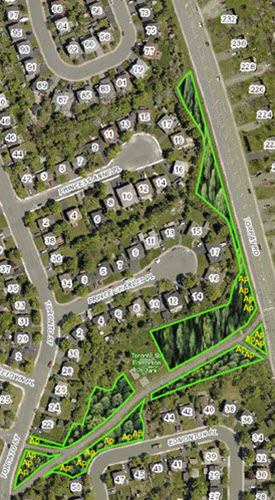 Torbay Road |
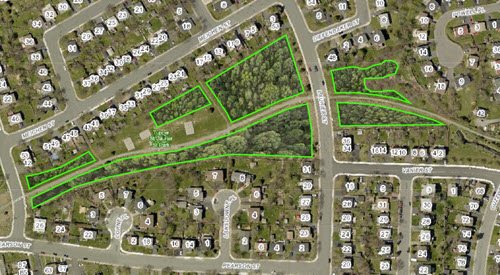 Tupper Laurier Park |
 Wishingwell Park |
Trees
This project will plant large stands of primarily native trees in beds, along trails, rest and play areas to promote naturalization of City-land while maximizing tree survival rates and their carbon storage potential. This work will have an immediate impact on increasing current level of biodiversity.
Species of trees that will be planted through this project include Larch, White spruce, White birch, American Mountain Ash, Pine, Willow, Trembling aspen, Red maple.
Benefits
The chosen locations are currently grass covered and require regular lawn mowing and other maintenance that produces GHGs.
Once the project trees are planted the City will stop mowing those areas which reduces our fossil fuel use by 1,356 litres of gasoline per year or about 3.8 tonnes of GHGs per year - which is approximately equivalent to taking 1.2 passenger vehicles off the road every year.
Urban forests play an important role in helping cities adapt to and mitigate the impacts of climate change and provide a range of other benefits to our community:
- reduces air pollution and provides oxygen
- improves water filtration, stores water and reduces stormwater runoff
- helps provide habitat for wildlife and promotes and preserves biodiversity
- makes our city more beautiful
- increases property values
- provides space for recreation
- promotes mental and physical well-being like reducing stress